Essay • 2026 • 6 min read
Part3 Special Episode - ポケモンと神道OS - なぜ私たちは終わらない世界に惹かれ続けるのか?

Pokémon Unintentionally Represents Shinto Animism

  
Why do we keep returning to stories that refuse to end?

Chapter 1. The Shintō OS – A Cultural Engine You Never Chose Part3 Special Episode
Examining Pokémon as modern myth, this episode illustrates how Shinto animism, cyclical time, and restorative ethics create an endlessly enduring
 

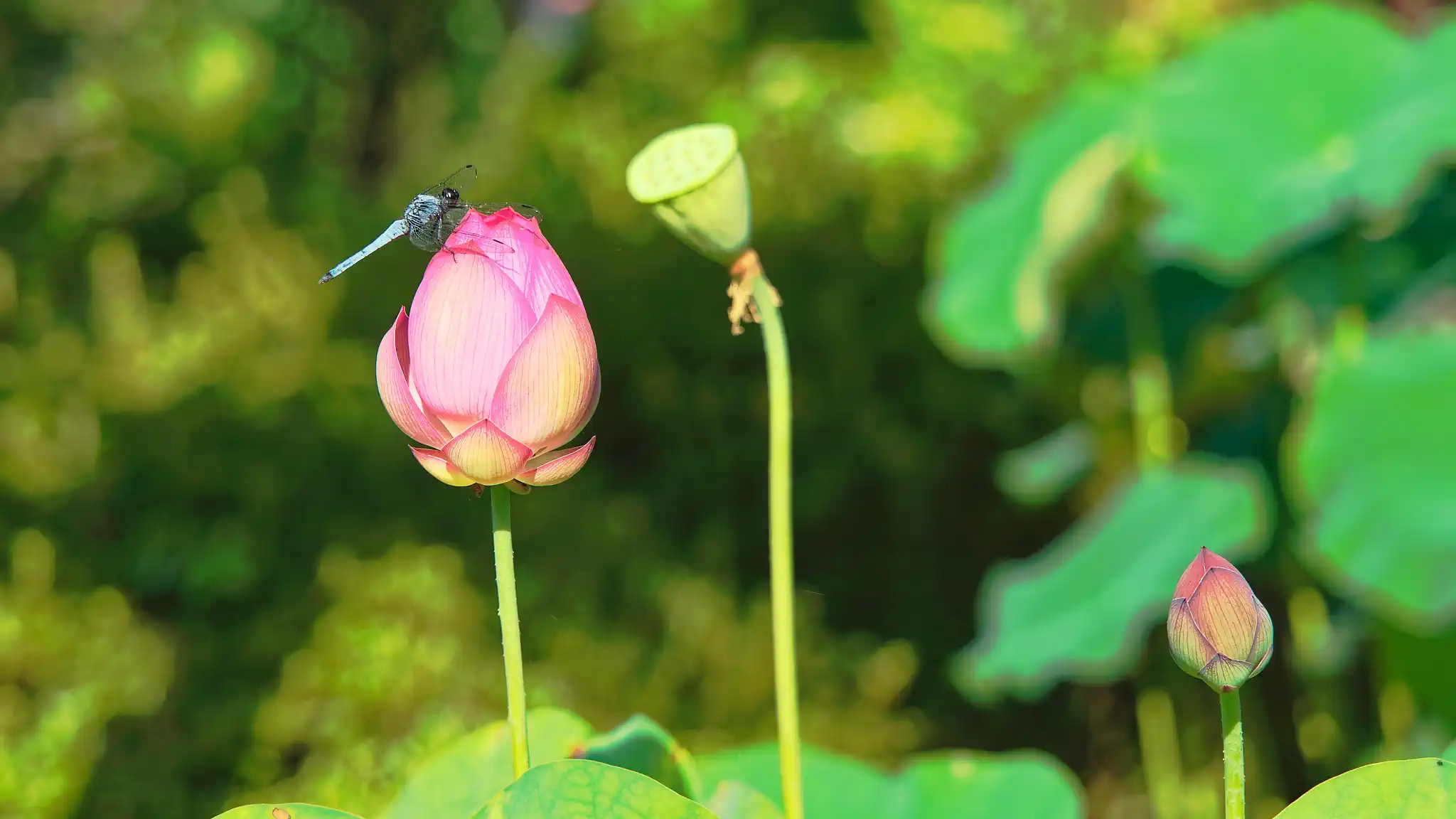
Image: A dragonfly resting on a lotus flower at 法金剛院(Hōkongōin Temple), Kyōto
During the summer, the temple’s gardens are specially opened to the public. The lotus flowers, planted beautifully across the pond and grounds, attract a vibrant gathering of insects, including butterflies, dragonflies, and bees.

間
間 MA Editorial BiScène Kyoto
Pokémon Unintentionally Represents Shinto Animism Why do we keep returning to stories that refuse to end?

Part 3 : Special Episode: Pokémon and Shintō OS

- Why Are We Drawn to Worlds That Refuse to End?

At the root of sits —the "myriad spirits." An animistic grammar: spirit resides in mountain and river, stone and tree, wind and thunder, and even in a well-worn tool left on a shelf for decades. Every thing is read as a subject with presence, not mere object.

Pokémon translates this grammar into contemporary character design. They are not simply creatures. They are spirits, natural forces made visible, neighbors who share the same air—and sometimes objects of awe one stands before quietly. has the bearing of a sacred beast. , , and are portrayed as divine beings symbolizing the forces of nature. slips into appliances; evokes the spirit of a blade; evokes the idea of —the belief that objects can acquire a spirit after long use. These are not accidents. They are the necessary expression of a world that does not cut "thing" from "spirit." In a landscape where countless beings stand as equals, coexistence outweighs conquest, and harmony outweighs condemnation.

A Narrative of Order and Reconnection

I believe Pokémon endures because its stories never stage a final judgment between good and evil. Legendary Pokémon are placed in the world not as arbiters but as functional forces—maintaining order the way seasonal winds maintain climate.

Here the concept of matters again. It is not sin; it is dissonance, a state out of tune. Conflicts in Pokémon are never wars against an absolute adversary. They are processes: calming what has grown erratic, returning a destabilized being to its community. Status ailments are cured. Runaway Pokémon are soothed. Battles end without taking life. The and healing moves function as purification apparatuses embedded into the world's infrastructure.

This ethics aims not at punishment but recovery, not at condemnation but reconnection. And that orientation feeds directly into how growth is understood: victory in battle is the accumulated result of practice, not a trophy won by defeating an enemy. Evolution is a passage point, not a summit. Sometimes the right move is to pause. Sometimes it is to remain as you are. In that permission lies a Japanese sense of time-as-dō—a Way walked continuously, never finished.
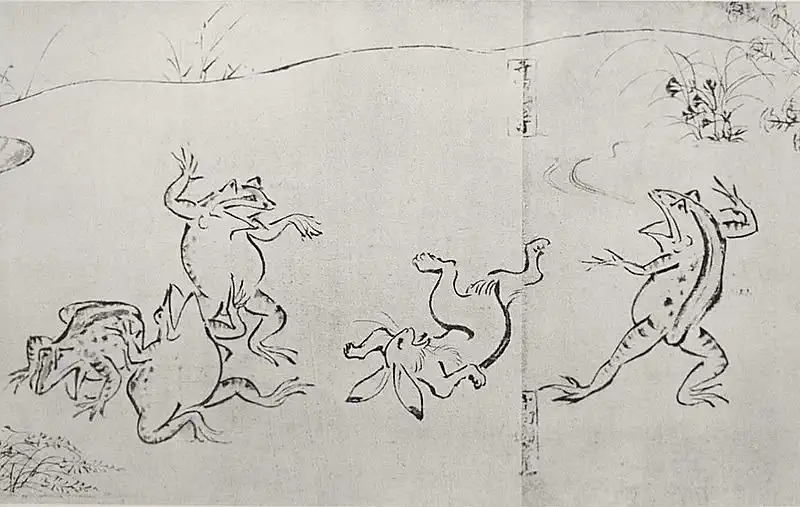
鳥獣戯画=Chōjū-giga (Scrolls of Frolicking Animals) at  高山寺(Kōzanji Temple), Kyoto.
鳥獣戯画=Chōjū-giga (Scrolls of Frolicking Animals) at  高山寺(Kōzanji Temple), Kyoto. These legendary scrolls depict animals with the same lively spirit and souls as humans—a fascinating ancient resonance with the animistic worldview that continues today in stories like Pokémon, where all beings share the same spiritual weight.

A World Without an Ending

Western narrative tends toward linear time: a beginning that accelerates toward an end. time moves differently. Seasons return. Festivals repeat. The world does not conclude; it is continually re-settled, re-arranged.

The Pokémon series structure mirrors this precisely. One journey closes, and the world continues—new regions appear, new beings emerge, the same shape of adventure updates itself without closing its book. Here the concept of overlays naturally: as Ise Grand Shrine is rebuilt through every twenty years to transfer craftsmanship and renew purity, so too does Pokémon's world gain its perpetuity through cyclical regeneration. Completing a Pokédex or claiming a championship marks a threshold, not an arrival. The world remains permanently unfinished; the premise that one cannot grasp everything all at once is written into the narrative's deepest structure.

An Unintentional Design

did not set out to build a allegory. His starting point was a personal, physical experience: collecting insects as a boy.

But in Japanese culture, is not a creed one subscribes to. It functions as a behavioral precondition—a grammar of relationship already absorbed before language forms around it. Seeing nature as a partner in relation rather than resource. Resolving disorder by calming and coexisting rather than annihilating. Treating an unfinished story as the natural state of things, not an anomaly. These instincts combined without conscious authorship and embedded themselves as the world's underlying syntax. The result: Pokémon carries no overt religious color yet stands, unmistakably, as a deeply -shaped world. It is not an ideology, but rather the feel of the world, shared through touch.

A Living Myth for the Present

, an ethics centered on recovery, time that loops rather than ends—these layers stack, and Pokémon updates itself endlessly as story.

What matters is that this narrative claims no single righteousness, no exclusive doctrine. It remains an open vessel: everyone can step inside, layer their own journey over the pattern without collision, and find their path already partially drawn into the map.

For me, writing this has been an attempt to name what I once felt as a quiet order no one could point to—what I now call "." What holds most power in any culture is often the thing that runs without explanation, without announcement, beneath everything we can see.

Card Folio • 空間語彙のカルタ

Three Spatial Lexicons: The Sacred Karuta Folio

Tap or hover over each consecrated archetype to reveal its spatial mechanics and philosophical gloss. (各カルタをクリックまたはホバーすると、空間構造と注釈が開きます)

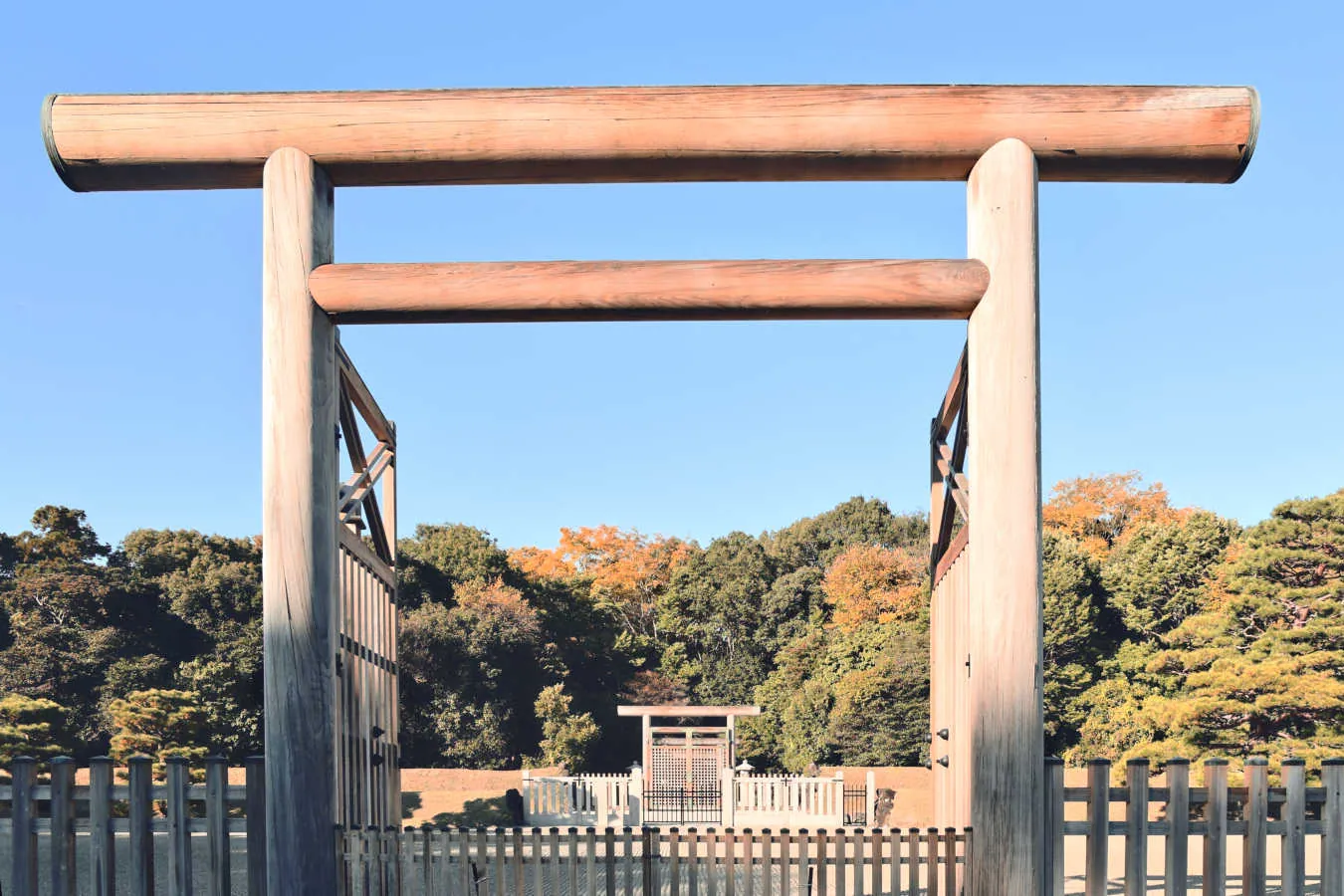
Ancient cryptomeria forest and gravel approach at Emperor Jimmu Mausoleum
八 Miryad of Spirits
Yaoyorozu no Kami

八百万の神

Animistic Belief

八 FOLIO 01

八百万の神 Yaoyorozu no Kami

Animistic Belief

「数え切れないほど無数に存在する自然界の神」を指す古代の表現。道具にも霊威を認める。

The animistic outlook that myriad spirits dwell in mountains, rivers, trees, animals, and even everyday tools. 'Yaoyorozu' means an uncountable multitude rather than a literal number.

FOLIO 01
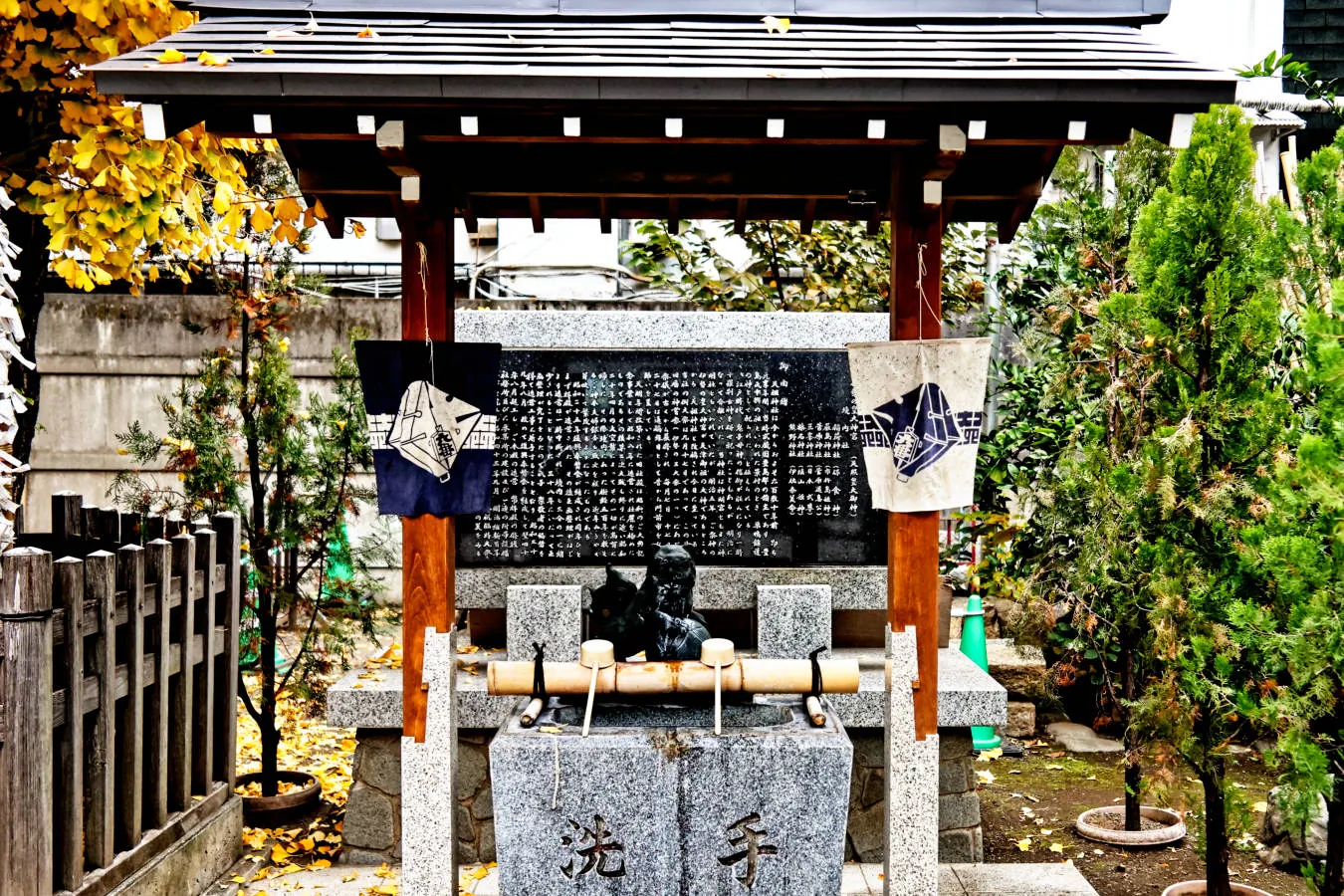
Natural granite water basin chouzuya filled with spring water and ladles
手 A Water Pavilion
Chōzuya

手水屋

Visitors Purification

手 FOLIO 02

手水屋 Chōzuya

Visitors Purification

川や海で全身を洗い清めた古代の禊を、手と口のみに凝縮した設備。柄杓で左右の手と口を清める。

A water pavilion at shrine entrances where visitors rinse their hands and mouth with a ladle, condensing the ancient practice of bathing the whole body in a river or sea into a symbolic gesture.

FOLIO 02
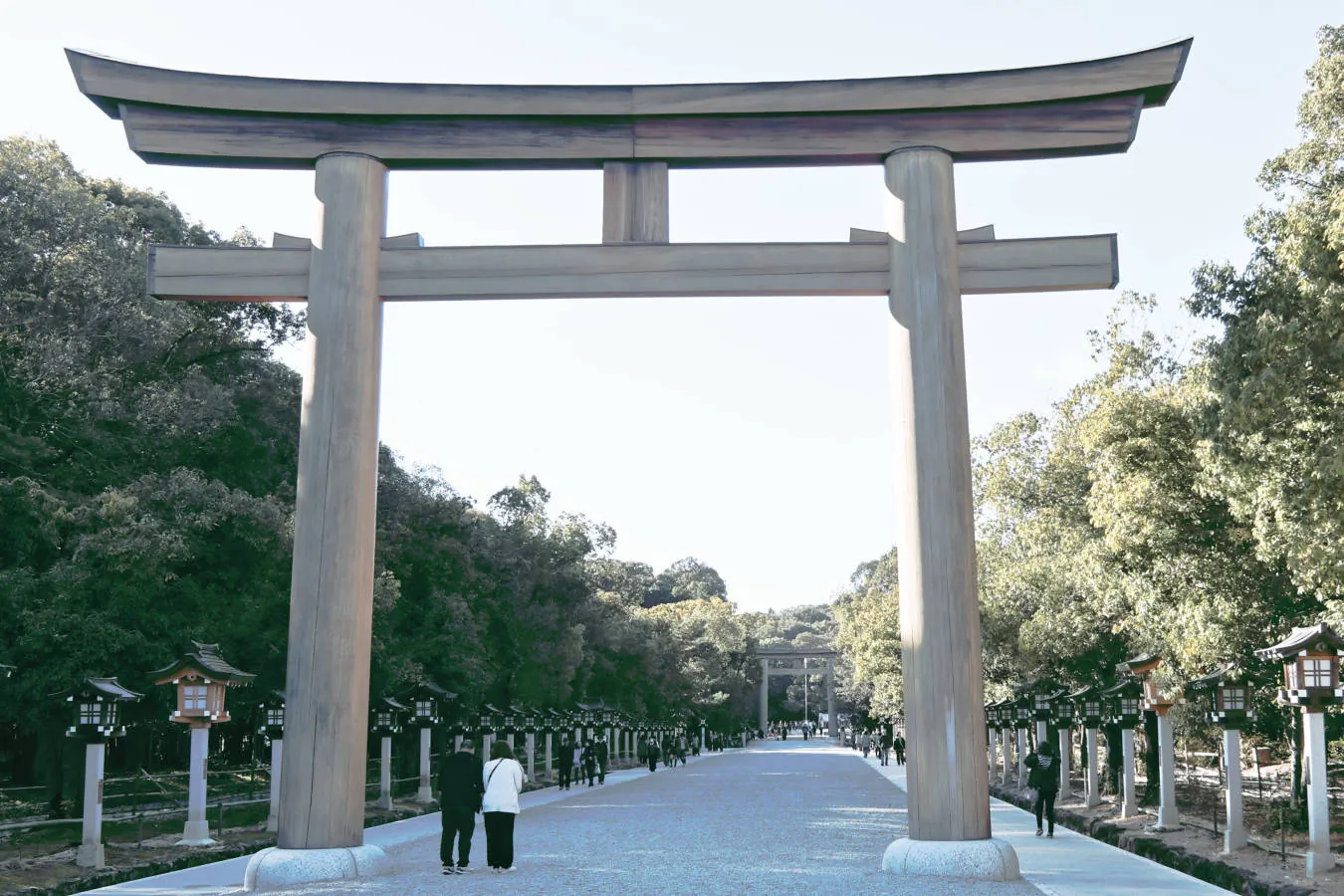
Expansive sacred white gravel path with towering trees leading toward the torii gate at Kashihara Jingu
正 Walking on Path Edges
Seichū

正中への配慮

The quiet etiquette

正 FOLIO 03

正中への配慮 Seichū

The quiet etiquette

参道の中央は神様の通り道とされるため、敬意を払い端を歩く不文律。

Etiquette for walking the sandō, the approach path to a shrine, often a long forest or mountain trail: its center, seichū, is the deities' passage, so visitors keep to the sides.

FOLIO 03